The Quick Answer: When to Choose Glass, When to Choose Plastic
| Choose Glass When… | Choose Plastic When… |
|---|---|
| Your formula contains essential oils | Your formula needs a squeeze tube or flexible dispenser |
| Premium positioning is critical to your brand | Shipping weight and cost are major concerns |
| Product contains alcohol or strong solvents | You need shatter-resistant packaging (shower, travel) |
| Your target market is EU (glass recycling is universal) | MOQ is below 3,000 pcs for custom shapes |
| Shelf presence and weight signal luxury | Your product is for daily use in bathrooms (safety) |
10-Dimension Comparison: Glass vs Plastic
| Dimension | Glass | Plastic (PET/PP/Acrylic) |
|---|---|---|
| Chemical Resistance | Excellent — inert, no reaction with most formulas | Variable — PET good, PP excellent, acrylic poor with alcohol |
| Gas Barrier | Near zero O₂/CO₂ permeability | Low to moderate — PET best, PP moderate |
| Light Protection | Amber/violet options available 0-100% blocking | Opaque options available; clear plastic = zero UV protection |
| Weight | Heavy (2.5 g/cm³) — shipping cost factor | Light (0.9-1.4 g/cm³) — 60-80% lighter |
| Shatter Resistance | Breaks on impact — safety concern in bathrooms | Shatter-resistant — safe for shower/travel |
| Recyclability | Infinitely recyclable, 70%+ EU recycling rate | Limited — PET widely recycled, PP less, acrylic rarely |
| Consumer Perception | Premium, clean, trustworthy | Practical, modern, but “cheap” if thin-walled |
| Cost per Unit | $0.30-1.50 (5-200ml) | $0.10-0.60 |
| Custom Mold Cost | $3,000-15,000 | $1,000-5,000 |
| MOQ | 3,000-10,000 (custom), 500-1,000 (stock) | 1,000-3,000 (custom), 300-500 (stock) |
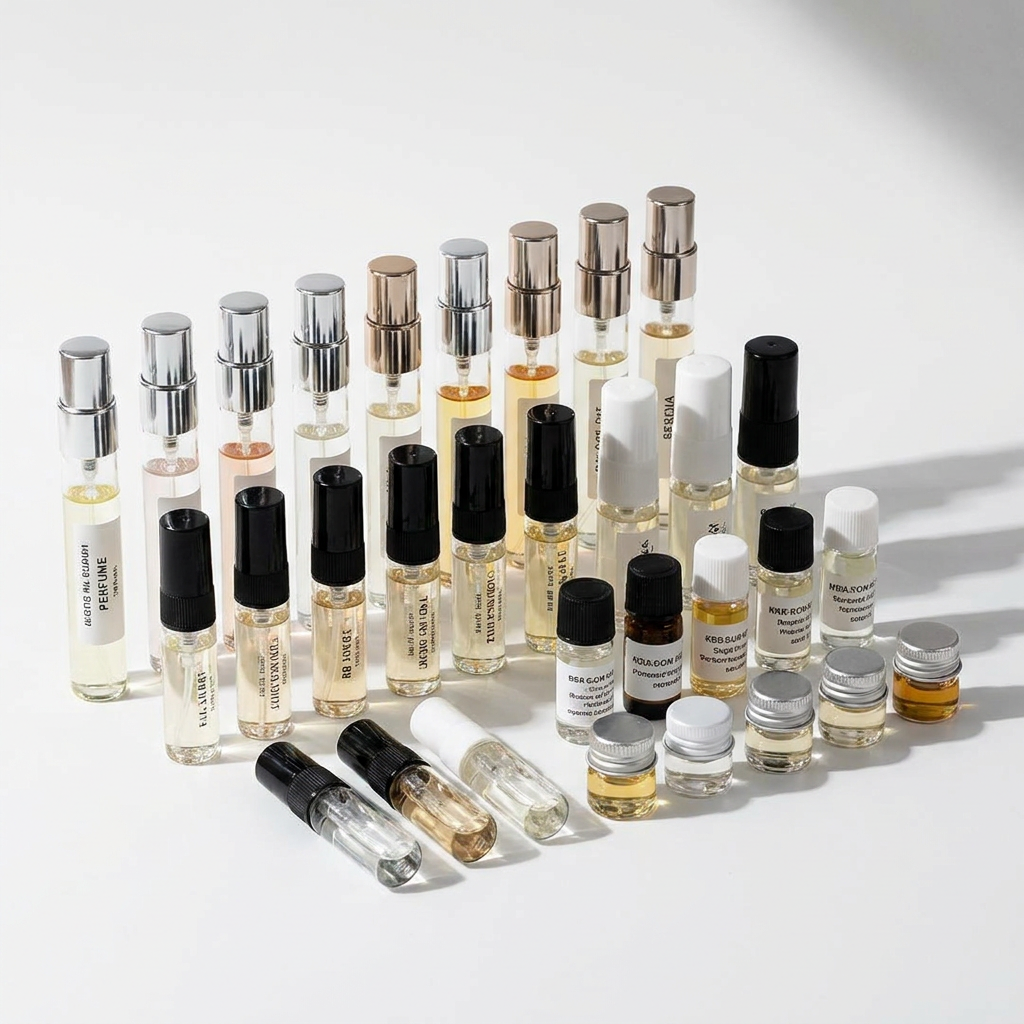
: 搜 media “glass” “plastic” — 玻璃瓶和塑料瓶并排对比图
Alt text: “Glass and plastic cosmetic bottles side by side comparison for skincare serum and lotion packaging”
Chemical Compatibility: The Decision Most Brands Get Wrong
This is the #1 technical reason to choose one over the other. If you skip this step, you risk product degradation, packaging failure, or customer complaints.
| Formula Type | Glass | PET | PP | Acrylic |
|---|---|---|---|---|
| Water-based toner | ✅ | ✅ | ✅ | ✅ |
| Oil-based serum | ✅ | ✅ | ✅ | ⚠️ Long-term oil contact may craze |
| Alcohol-based (perfume, sanitizer) | ✅ | ✅ | ✅ | ❌ Crazes on contact |
| AHA/BHA (pH 3-4) | ✅ | ⚠️ Test required | ✅ | ❌ Reacts with acids |
| Essential oils (undiluted) | ✅ | ⚠️ May swell over time | ✅ | ❌ Crazes |
| Vitamin C (L-AA) | ✅ (amber/violet) | ⚠️ UV-permeable | ⚠️ UV-permeable | ⚠️ UV-permeable |
| Retinol | ✅ (opaque glass) | ❌ UV-permeable | ❌ UV-permeable | ❌ UV-permeable |
| CBD oil | ✅ (violet UV glass) | ❌ UV-permeable | ❌ UV-permeable | ❌ UV-permeable + crazing |
Bottom line: For essential oils, retinol, CBD, and alcohol-based products, glass is not optional — it’s a chemical compatibility requirement.
Sustainability: Glass Wins, But Plastic Is Catching Up
| Sustainability Factor | Glass | Plastic |
|---|---|---|
| Recyclability | Infinite — no quality loss | Downcycling — quality degrades each cycle |
| Actual Recycling Rate (EU) | 76% | 32% (PET), <10% (PP) |
| Carbon Footprint (production) | High (1,400°C melting) | Lower (200-300°C extrusion) |
| Carbon Footprint (transport) | High (weight × distance) | Low |
| Microplastic Risk | Zero | Yes — minuscule, but present |
| Post-Consumer Recycled Options | 30-90% cullet | 30-100% RPET available |
The nuance: Glass has higher production emissions but infinite end-of-life value. Plastic has lower production emissions but poor end-of-life outcomes. For brands shipping heavy bottles long distances, the transport carbon can outweigh the material advantage.
Consumer Perception: What Your Buyers Actually Think
A 2025 consumer survey by McKinsey found:
- 72% of consumers associate glass with “premium quality”
- 58% perceive plastic as “less luxurious” — but “practical” for daily use
- 41% of Gen Z actively avoids plastic packaging for environmental reasons
- However: 63% of consumers don’t notice packaging material when purchasing online
Implication: If you sell primarily in physical retail (Sephora, department stores, boutiques), glass pays for itself in shelf presence. If you sell 80%+ online, plastic’s weight savings on shipping may matter more.
Cost Breakdown: Glass vs Plastic at Scale
| Order Volume | Glass (30ml bottle + closure) | PET (30ml bottle + closure) |
|---|---|---|
| 1,000 pcs | $0.85-1.20/unit | $0.30-0.50/unit |
| 5,000 pcs | $0.60-0.85/unit | $0.20-0.35/unit |
| 10,000 pcs | $0.45-0.65/unit | $0.15-0.25/unit |
| 50,000 pcs | $0.35-0.50/unit | $0.10-0.18/unit |
: 搜 media — 玻璃瓶和塑料瓶各选一张产品组图
Alt text: “Cosmetic glass bottles and plastic bottles comparison for skincare brand packaging decision”
FAQ
Q: Can I use glass for shower products?
A: Not recommended. Glass bottles in wet, tiled environments are a breakage hazard. Use plastic or specify a silicone sleeve for glass shower products.
Q: Is RPET plastic as clear as virgin PET?
A: 100% RPET has a subtle blue-gray tint. 30-50% RPET is nearly indistinguishable from virgin PET in clarity.
Q: Which is better for airless pump bottles — glass or plastic?
A: Plastic (acrylic or PET-G). Glass airless bottles are rare because the vacuum piston mechanism requires tight tolerances that are harder to achieve in glass. Acrylic airless bottles offer glass-like clarity with piston compatibility.
Q: Do glass bottles require more protective packaging for shipping?
A: Yes. Glass bottles need inner dividers and cushioning, adding $0.10-0.25/unit to packaging costs. Plastic bottles can use lighter packaging.
Q: Can I mix glass and plastic in one product?
A: Yes — hybrid packaging is common. A glass bottle with a plastic pump, or a plastic jar with a bamboo lid. This balances premium feel with cost and functionality.
Explore our glass bottle collection and plastic packaging collection at EcoFusion Group — both materials in stock sizes from 5ml to 200ml.