The Fundamental Difference: What Each Glass Blocks
| Wavelength Range | Light Type | Amber Glass | Violet UV Glass | Why It Matters |
|---|---|---|---|---|
| 280-315 nm | UV-B | Blocked | Blocked | UV-B degrades vitamins and antioxidants |
| 315-400 nm | UV-A | Blocked | Blocked | UV-A breaks chemical bonds in natural oils |
| 400-500 nm | Visible Blue-Violet Light | Passes through | Blocked | Blue light degrades essential oil terpenes, CBD, retinol |
| 500-700 nm | Visible Green-Red Light | Passes through | Passes through | Minimal cosmetic formula impact |
| 700-1000 nm | Near Infrared | Passes through | Passes through | May have subtle preservative effect on plant oils |
In plain language: Amber glass stops the UV rays that cause sunburn. Violet UV glass stops those plus the blue-violet visible light that degrades sensitive botanical ingredients. For most cosmetic formulas, amber is enough. For CBD, essential oils, and preservative-free natural products, violet is worth it.
Visual Comparison at a Glance
| Feature | Amber Glass | Violet UV Glass |
|---|---|---|
| Bottle Color | Warm brown-amber | Deep violet to near-black |
| Product Visibility | Semi-transparent — you can see the fill level | Opaque — bottle appears nearly black |
| Brand Association | Natural, apothecary, artisanal, trustworthy | Luxury natural, CBD, wellness, scientific |
| Market Prevalence | Very common — standard for essential oils | Premium/niche — signals higher-end positioning |
| Cost Premium vs Clear | +10-20% | +30-50% |
| Consumer Recognition | High — “amber bottle = natural product” | Moderate — growing with CBD market awareness |
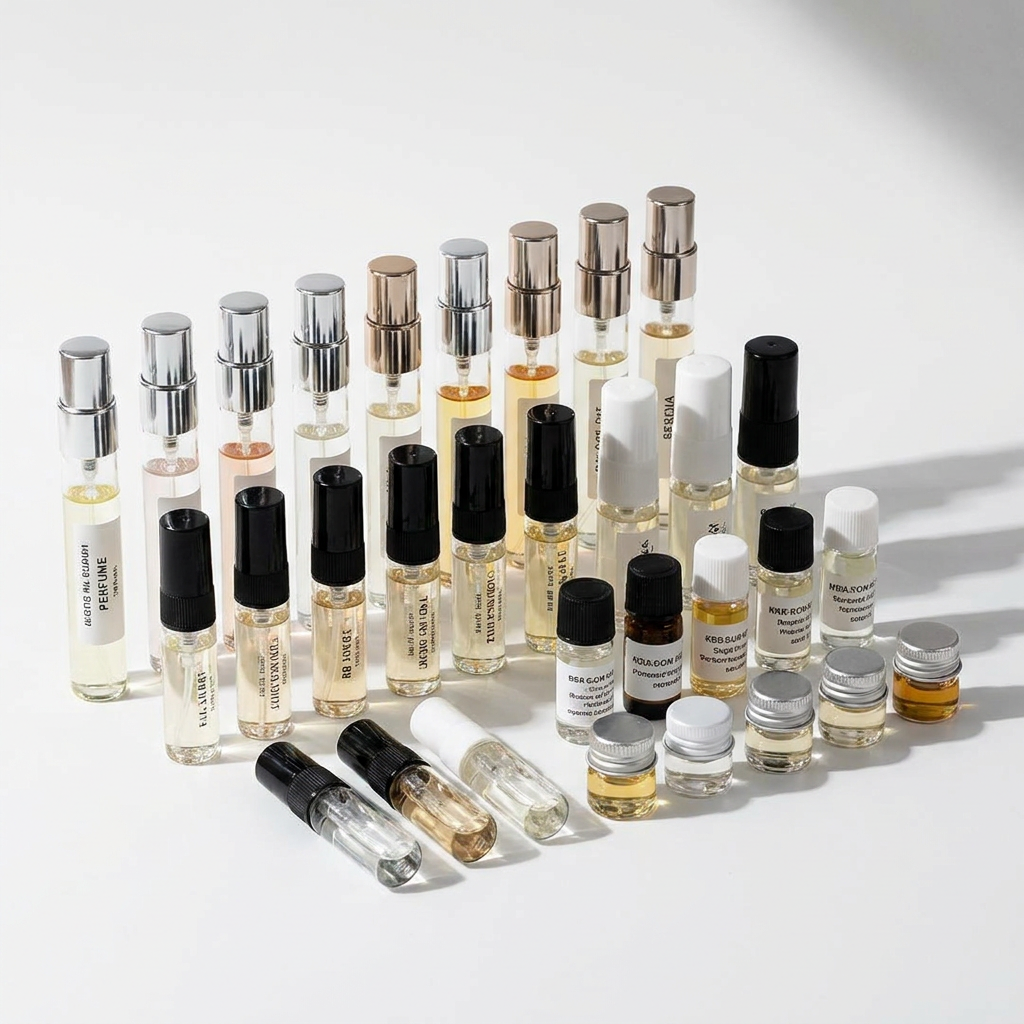
: 搜 media “amber” “UV” “violet” — 琥珀色和紫色玻璃瓶并排对比
Alt text: “Amber glass and violet UV glass cosmetic bottles side by side comparison for essential oil and CBD packaging”
Ingredient-by-Ingredient: Which Glass Your Formula Needs
| Ingredient / Formula Type | Sensitivity Level | Recommended Glass | Why |
|---|---|---|---|
| Essential Oils (lavender, tea tree, peppermint) | Very High | Violet UV | Terpenes degrade under visible blue light, not just UV |
| CBD / Hemp Extract | Very High | Violet UV | THC conversion and potency loss accelerated by full spectrum light |
| Retinol (Vitamin A) | Very High | Violet UV | Degrades under both UV and visible light |
| Vitamin C (L-Ascorbic Acid) | High | Amber (minimum) or violet | Primarily UV-sensitive; amber adequate if formula has antioxidants |
| CoQ10 / Ubiquinone | High | Amber | Primarily UV-sensitive; amber is sufficient |
| Plant Oils (argan, rosehip, jojoba) | Moderate to High | Amber | UV protection is the main requirement |
| Niacinamide | Low | Clear or amber | Stable under light; amber for premium perception only |
| Synthetic formulas with preservatives | Low | Clear | Light protection not required for stability |
Cost Breakdown: Is Violet Worth the Premium
| Order Volume | Amber Glass (30ml dropper) | Violet UV Glass (30ml dropper) | Violet Premium |
|---|---|---|---|
| 1,000 pcs | $0.55-0.75 | $0.80-1.10 | +$0.25-0.35/unit |
| 5,000 pcs | $0.40-0.55 | $0.55-0.75 | +$0.15-0.20/unit |
| 10,000 pcs | $0.30-0.40 | $0.45-0.60 | +$0.15-0.20/unit |
| 50,000 pcs | $0.22-0.30 | $0.35-0.45 | +$0.13-0.15/unit |
At retail: A $45 face oil in an amber bottle feels well-packaged. That same $45 oil in violet glass can justify a $55-65 price point — the violet premium pays for itself 3-5x over in perceived value.
Marketing Angle: How to Position Each Glass
| Amber Glass Story | Violet UV Glass Story |
|---|---|
| “Apothecary tradition” | “Scientific protection” |
| “Natural, honest, nothing to hide” | “Lab-grade light protection” |
| “Time-tested since the 19th century” | “Advanced photoprotection technology” |
| Works for: Natural skincare, aromatherapy, indie brands, Etsy sellers | Works for: CBD, clinical naturals, luxury wellness, $50+ serums |
: 搜 media “amber” — 琥珀瓶多规格排列
Alt text: “Amber glass dropper bottles and violet UV glass bottles in multiple sizes for cosmetic serum and oil packaging”
Decision Flowchart
Ask these three questions:
1. Does your formula contain CBD, retinol, or undiluted essential oils?
→ Yes → Violet UV glass is the correct choice. Don’t compromise.
→ No → Continue
2. Is your retail price above $50?
→ Yes → Violet UV glass reinforces the premium positioning.
→ No → Amber is sufficient and won’t inflate your COGS unnecessarily.
3. Does your brand story lean “scientific/clinical” or “natural/apothecary”?
→ Scientific → Violet UV glass (sounds like lab equipment).
→ Natural → Either — amber for tradition, violet for premium natural.
FAQ
Q: Can I mix amber and violet bottles in the same product line?
A: Yes — many brands use amber for lower-priced SKUs and violet for hero products or limited editions. The visual contrast on shelf actually helps differentiate the product tier.
Q: Does violet glass look black to customers?
A: In thick walls (jar bases), yes — it appears nearly black. In thinner walls (bottle sides), the deep violet color is visible, especially when backlit.
Q: Is there a middle option between amber and violet?
A: Cobalt blue glass blocks some visible light but not as comprehensively as violet. It’s a niche option mostly used for branding rather than protection level. Green glass (wine-bottle green) offers similar partial protection.
Q: Does amber glass fade or change color over time?
A: No — the amber color is integral to the glass chemistry (iron + sulfur + carbon), not a surface coating. It never fades, peels, or washes off.
Explore our amber glass collection and UV violet glass collection at EcoFusion Group — both available in dropper bottles, pump bottles, and jars from 5ml to 200ml.